We all practice to improve our golf game, but there’s a big catch: Practice performance does not equal learning. This is one of the most important ideas in golf improvement — and it’s the foundation for everything else in this practice series.
In this article, we’ll explain the science behind learning and why hitting it great in practice isn’t always the best predictor of whether you’ve had a great practice session.
What learning actually is
In skill acquisition, learning is defined as a relatively permanent change in your ability to perform a skill.
Those two words — relatively permanent — are often forgotten. Twenty good shots in a row at the range isn’t learning. It’s practice performance: how you hit it today, in those conditions, with that club, off that mat. Learning is what’s still there for the next range session, and what shows up on the golf course.
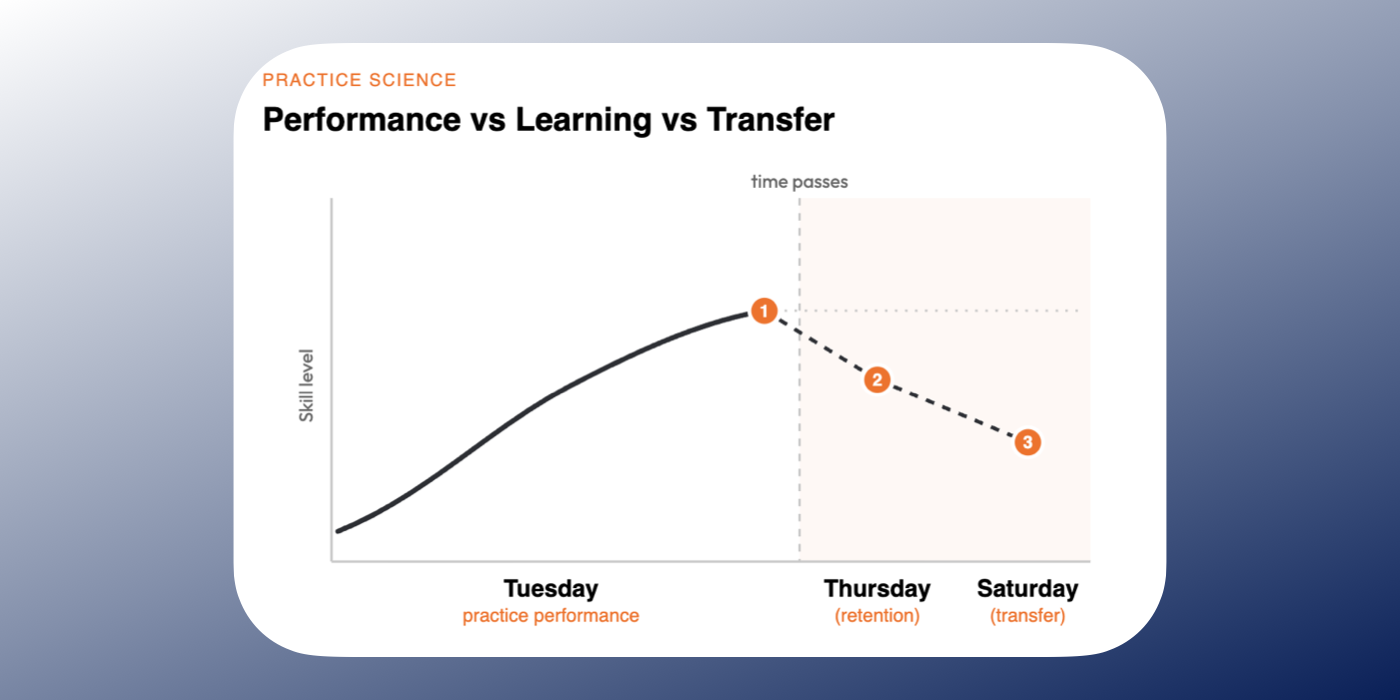
Check out this graphic below.
There are three key concepts that we need to understand:
- Practice performance
- Retention (true learning)
- Transfer (what we really care about)
The graph above shows a nice golf example. Tuesday’s range session, practicing your driving. Thursday’s return trip is your 2nd driver practice session, but it’s also a retention test – how much improvement is left from Tuesday? Saturday’s competition is your transfer test – how well does your new driving ability transfer to the golf course?
The pattern in this graph is one of the most repeated findings in motor learning research. Performance climbs during the session, dips when you come back (retention), and dips again when the conditions change (transfer). The dips are normal, they’re not a sign you’re broken. What remains in retention and transfer is what you actually learned.
Why the drop happens: learning is expensive
The problem is that golfers assume that any practice will automatically make them better, but this is wrong.
Learning is a really expensive process for the body. At a micro level, your body has to rewire your brain and spinal cord, consolidate new pathways to generate movements and store new knowledge of how to perform a skill for later retrieval.
When you view learning through this lens, a much better question is to ask – why should you get better as a result of your practice?
We get into this later on in the series when we look at practice volume, specificity and practice difficulty. But keep this concept in your mind any time you go and practice.
Why Does The course Result In A bigger drop?
In any transfer test, we tend to see a drop in performance from a player’s retention score, because it’s a slightly different skill from the one we’ve practiced. The more different the transfer test, the less skill is transferred – this is something important to consider for your practice sessions.
The range is very different to playing on the course. Same lie every time, perfect stance, no consequences. Many golfers hit twenty 7-irons in a row on the range, but when do you ever do that on the golf course? When you consider these differences, it’s no surprise you hit the ball differently on the golf course.
There is a place for blocked practice, hitting the same club over and over again (we cover this in a later article), but just realise that it doesn’t represent how you’ll hit the ball on the golf course, from varying lies, with one attempt.
Key learnings
There are four key concepts you can take away from this short article.
- Practice performance is not learning. You just hit 20 good shots in a row.
- Retention is always lower than your best practice performance (accept it).
- We see another dip in performance from retention to transfer (don’t expect anything different).
- If you really want your range performance to represent how you play, make your practice mirror what you do on the golf course.
Later in this series, we’ll see that sometimes worse practice performance results in improved retention and transfer. Many of the things that improve learning make practice feel worse — harder, messier, less satisfying.
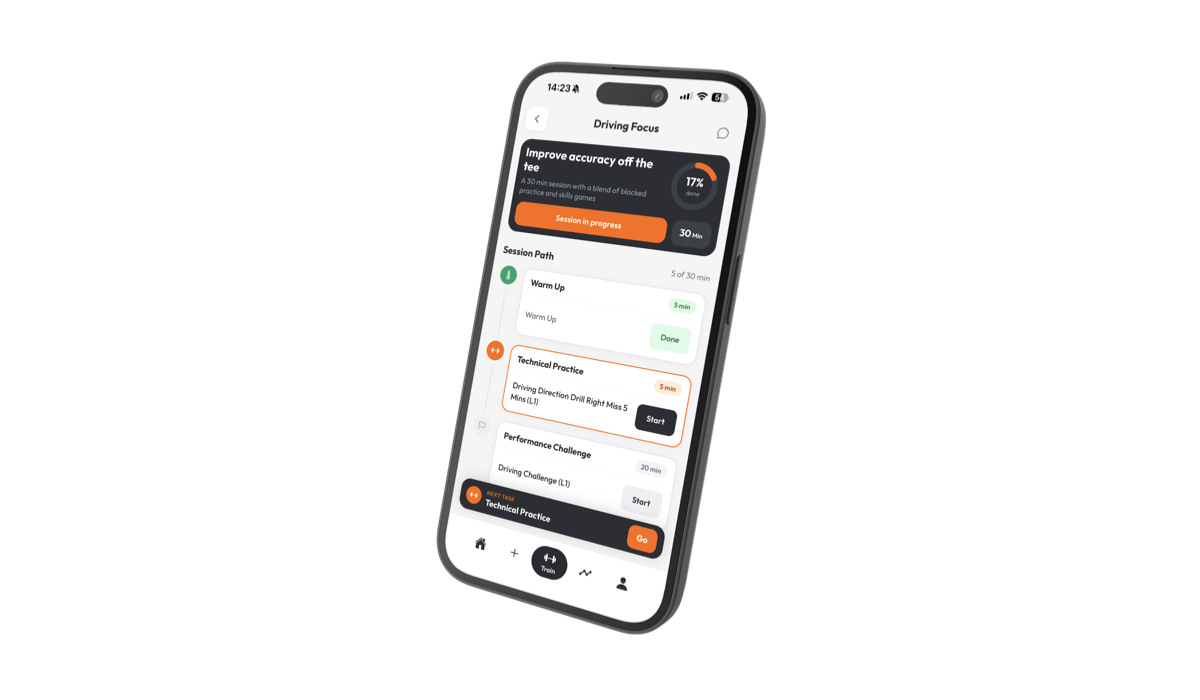
The Break X Golf app provides a personalised practice plan that optimises your practice for shooting lower scores. Each session features a blend of blocked practice (for more reps and retention) and performance challenges (to help transfer more skill onto the golf course).
Coming up in this series
- Practice performance vs learning (this article)
- Practice volume — how many balls should you actually hit? (coming soon)
- The 4 levels of practice specificity — what exactly should you work on? (coming soon)
- Random vs blocked practice — why messier practice transfers better (coming soon)
- Optimal challenge — making practice hard enough to force change (coming soon)
- Feedback — what to pay attention to after every shot (coming soon)